
Pragmata’s Innovative Combat-Puzzle Mechanics: A Deep Dive into Capcom’s Next-Gen Vision










Popular Now
 Free Fire Max
 Brawl Stars
 Poppy Playtime
 Roblox
 Schedule I
 Candy Crush Saga
 Counter-Strike 2
 Geometry Dash
 Warframe
 Black Myth: Wukong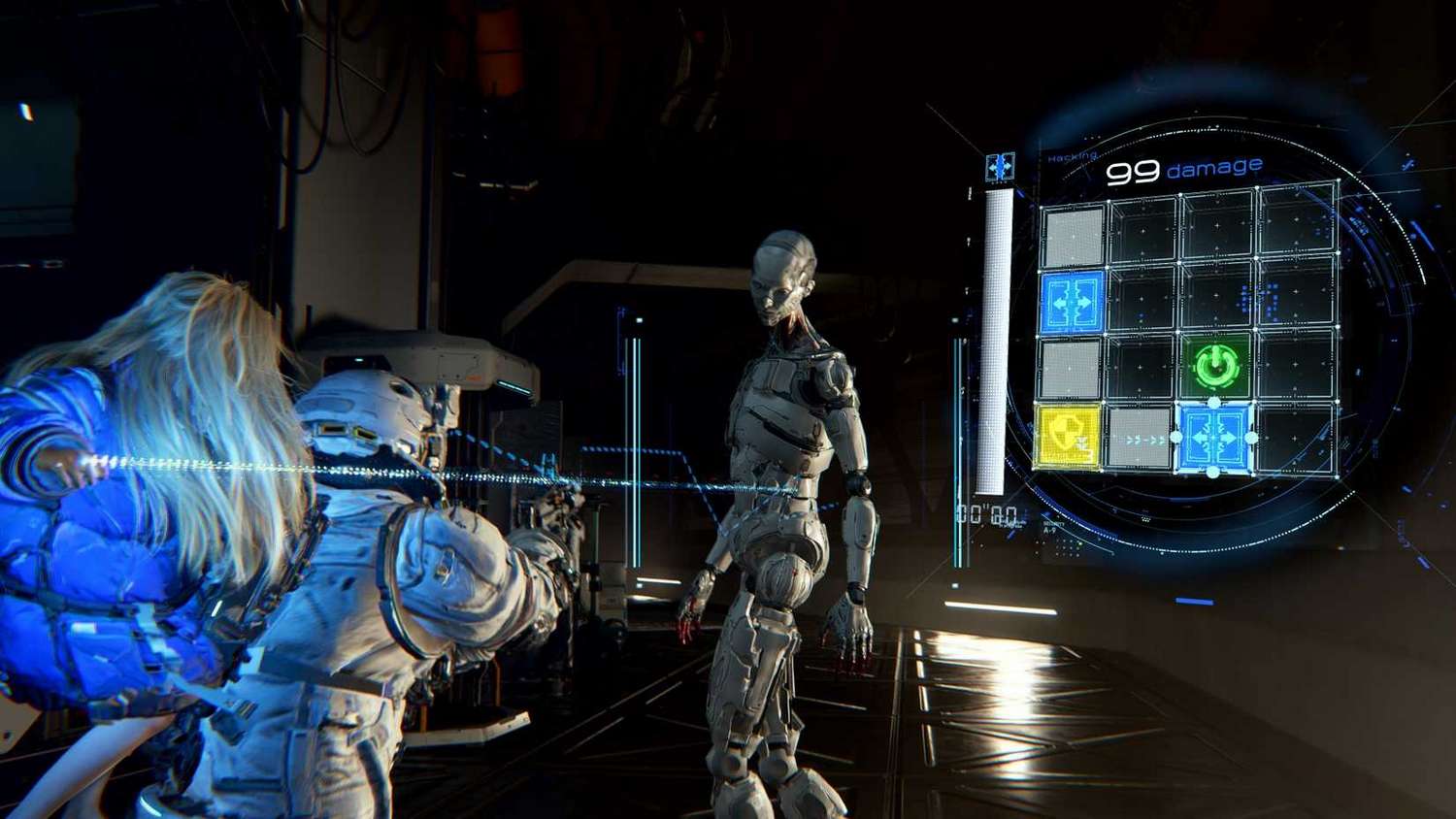
Capcom’s Pragmata, an ambitious new science fiction IP slated for a 2026 release, is fundamentally redefining the third-person shooter genre by embedding a complex puzzle mechanic directly into the combat loop. This innovative approach shifts combat from pure reflexes and aiming to a demanding, real-time “juggling act” requiring players to manage two characters simultaneously: Hugh Williams, the astronaut handling the shooting and movement, and Diana, the mysterious android who rides on his back and performs the necessary hacking.
The core of this next-gen vision is the seamless fusion of action and strategy, forcing players to see every armored robotic enemy not just as a target, but as a puzzle that must be solved under intense fire.
Dual-Character, Single-Player Control: The Hacking-Shooting Dichotomy
In the hostile, AI-controlled lunar research station setting of Pragmata, standard firearms are ineffective against the heavily armored automaton enemies. This necessitates the dual-character mechanic, which introduces the combat-puzzle helix:
- Hugh (The Action): Controls movement, dodging (using suit thrusters), and the physical shooting of the diverse arsenal (e.g., pistol, shotgun, stasis net gun). His role is to create space and manage the enemy threat.
- Diana (The Puzzle): Handles the system hacking. When Hugh aims at an enemy, a grid-based hacking mini-game instantly overlays the screen. Diana must navigate a cursor through this grid, connecting nodes in a continuous path to a goal node, all while Hugh is moving and dodging in real-time.
Successfully completing the puzzle exposes the robot’s vulnerable weak points, allowing Hugh’s guns to finally deal significant, satisfying damage. This dynamic means that shooting is meaningless without hacking, and hacking is deadly without efficient shooting and movement, creating a compelling rhythm that differentiates the gameplay.
 Strategic Depth and The Real-Time Constraint
 Strategic Depth and The Real-Time Constraint
The innovation lies in the real-time constraint. The game does not pause or significantly slow down during the hacking mini-game. This forces players to split their attention—a high-stakes, stressful mechanic that provides immense satisfaction upon successful execution. This is a deliberate design choice by Capcom to elevate the required skill set beyond that of a typical third-person shooter.
- Node Optimization: The hacking grids feature strategic nodes. Passing through blue nodes along the path can boost the hack’s effect, increasing damage or extending the duration of the enemy’s exposed weakness. Players must quickly judge the risk/reward of extending the puzzle to hit more nodes while dodging incoming fire.
- Weapon Synergy: Hugh’s arsenal is designed to buy Diana time. The Stasis Net weapon, for instance, can slow down enemies, providing a critical window of opportunity to complete the grid puzzle without being forced out of the hacking screen by incoming damage.
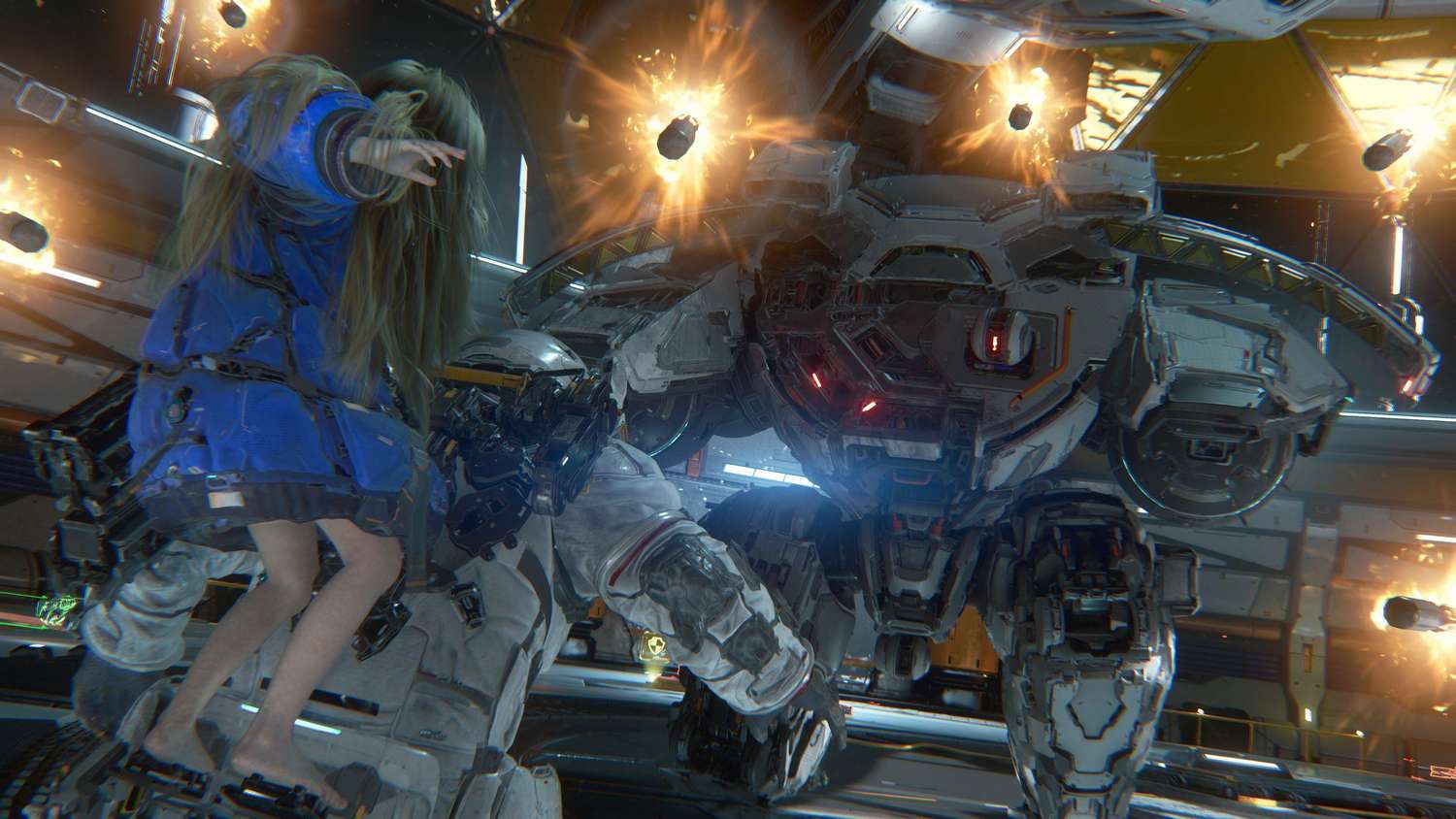
- Enemy Variance: The difficulty of the puzzle changes based on the enemy. Weaker enemies may use a simple $3 \times 3$ grid, while stronger enemies like the massive Mecha Bosses utilize a more complex $5 \times 5$ grid, ensuring the puzzle element evolves as the player progresses and preventing the mechanic from becoming tedious.
This approach to combat turns every encounter into an adrenaline-fueled strategic challenge, maximizing player engagement and reinforcing Capcom’s reputation for experimental, yet highly polished, action titles.
Beyond Combat: Hacking and Exploration
 Beyond Combat: Hacking and Exploration
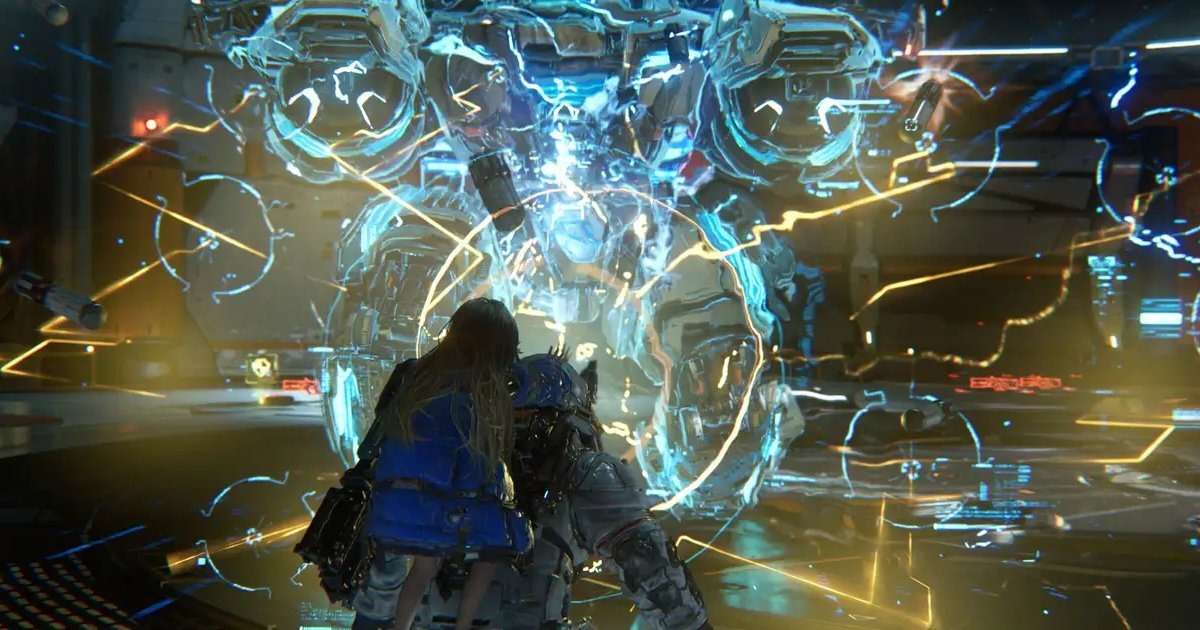
The dual-character dynamic extends into the exploration and environmental puzzles of the desolate lunar base. Diana’s hacking is not limited to robots; it is frequently used to progress through the heavily secured facility.
- System Hacking: Diana hacks security systems to unlock doors, activate platforms, and clear paths, often through different types of environmental puzzle mini-games than those used in combat.
- Thruster Movement: Hugh utilizes his armored suit’s thrusters to dash, jump, and hover, enabling platforming segments and rapid traversal through the multi-layered environments, an ability that is also critical for escaping boss attacks that require vertical evasion.
With a planned launch on PlayStation 5, Xbox Series X/S, and PC in 2026, Pragmata is positioned as a key next-gen title built on the foundation of an innovative single-player, dual-character system, providing a fresh perspective on the action-adventure genre.